
Friday, April 3, 2026
Back to Home

MTD for Landlords UK 2026: What You Must Do Before 6 April

Making Tax Digital for Income Tax is mandatory from 6 April 2026. A complete guide for UK landlords — who qualifies, how joint ownership works, software options, and penalty rules.

MTD for landlords UK 2026 — HMRC compliance deadline guide for UK property owners

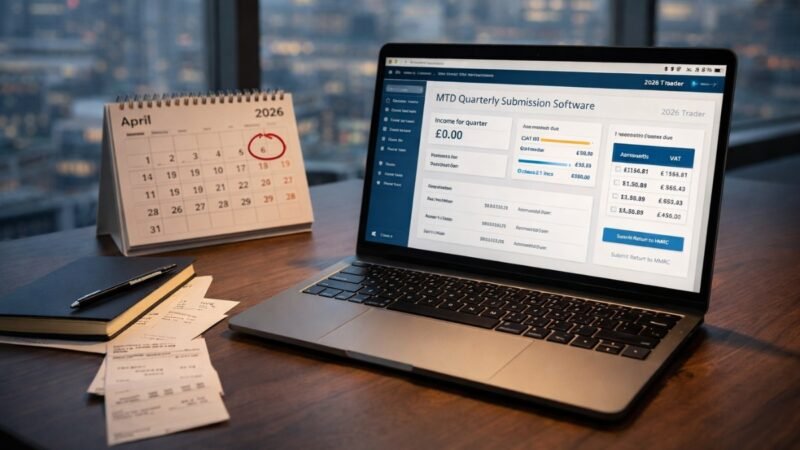
MTD for landlords UK 2026 is no longer optional — if your gross rental income crossed £50,000 last year, the 6 April deadline applies to you. This guide covers who qualifies, how the joint ownership threshold actually works, what the new system requires, and what you need in place before the deadline.

This article is intended as general information only and does not constitute tax or financial advice. We recommend consulting a qualified accountant or tax adviser for guidance specific to your circumstances.

Who Does MTD for Landlords UK 2026 Actually Affect?

MTD for Income Tax — formally Making Tax Digital for Income Tax Self Assessment (MTD ITSA) — is rolling out in phases. The threshold is calculated on total gross income from self-employment and UK property before expenses. Profit doesn’t come into it.

The phases:

  • 6 April 2026: Qualifying gross income above £50,000 (2024–25 tax year)
  • 6 April 2027: Above £30,000
  • 6 April 2028: Above £20,000

HMRC estimates around 780,000 individuals fall into Phase 1. If your combined rental and self-employment income exceeded £50,000 gross in 2024–25, you’re in scope from next month. HMRC is determining eligibility from your 2024–25 Self Assessment return — the one submitted by 31 January 2026 — and writing to those affected.

Two groups are excluded from the current rollout: limited companies (separate rules apply) and partnerships (no mandation date confirmed yet). If you own property through a company, you’re not affected by this change. If you’re an individual landlord — you are.

The Joint Ownership Question — How the Threshold Works

This is where most landlords get confused. The rules are clear once you understand them, but they’re not immediately obvious.

MTD treats tax liability individually. If you co-own a property, HMRC looks at your share of the rental income — not the property’s total — when deciding whether you qualify.

Here’s a concrete example: a property generates £60,000 gross rent per year. Two siblings own it equally, each receiving £30,000. Neither hits the £50,000 threshold on that income alone. But if one sibling also earns £25,000 from self-employment, their combined qualifying income is £55,000. They must register for MTD from 6 April 2026. Their co-owner, with no other income, does not.

The practical implication: two owners of the same property may need two entirely separate MTD software setups. You don’t report the property as a single entity unless you’re a registered partnership. Each co-owner manages their own digital records, their own quarterly submissions, their own registration.

What MTD Actually Requires You to Do

Understanding MTD for landlords UK 2026 starts here — the system doesn’t change what you owe or when you pay it. It changes how you record and report throughout the year. Four things are now required:

1. Digital record-keeping Every rental income receipt and expense must be logged in HMRC-recognised software as it happens. A spreadsheet is only compliant if connected to HMRC via approved bridging software with a maintained digital link. Manual re-entry from a spreadsheet into an HMRC portal is not compliant — full stop.

2. Four quarterly submissions These are income and expense summaries, not tax returns. You’re giving HMRC a running picture of your financial year, not triggering a payment. The quarterly deadlines are:

  • 7 August (Q1)
  • 7 November (Q2)
  • 7 February (Q3)
  • 7 May (Q4)

3. A Final Declaration by 31 January This replaces your annual Self Assessment return — but the deadline stays the same. For the 2026–27 tax year, your Final Declaration is due by 31 January 2028. This is where you confirm your full tax position, claim reliefs, and include any other income sources not covered by your quarterly updates.

4. HMRC-recognised software You must use software from HMRC’s approved list. There’s no default government portal to fall back on — HMRC is closing that route for anyone mandated into MTD.

Key Dates: Your MTD Compliance Timeline

The timeline below covers every MTD for landlords UK 2026 deadline you need to track.

MilestoneDate
MTD ITSA mandatory for £50k+ qualifying income6 April 2026
First Q1 quarterly update due7 August 2026
Q2 quarterly update due7 November 2026
Q3 quarterly update due7 February 2027
Q4 quarterly update due7 May 2027
Final Declaration due (2026–27 tax year)31 January 2028
Threshold drops to £30,0006 April 2027
Threshold drops to £20,0006 April 2028

Choosing MTD-Compatible Software: What Landlords Need to Know

Not every HMRC-recognised platform handles all income types. This matters more than most landlords realise.

Before you commit to anything, check that your software covers the income types relevant to your situation — UK property income, foreign property income if applicable, and self-employment income if you have it. Some platforms handle only one or two — choosing the wrong one is one of the most common MTD for landlords UK 2026 compliance errors. You can verify this using HMRC’s software finder on GOV.UK, which generates a personalised list based on your specific circumstances.

The main options divide into three categories.

Full cloud accounting platforms. Xero, QuickBooks, Sage, and FreeAgent are all HMRC-recognised for MTD ITSA. FreeAgent is free to sole traders banking with NatWest, RBS, Ulster Bank, or Mettle, provided you make at least one transaction per month. That banking relationship is worth factoring into your software decision — choosing the right business account can eliminate your software costs entirely. Our guide to best business bank accounts for UK landlords covers the options in detail.

Landlord-specific platforms. Several property-focused tools appear on HMRC’s recognised software list and combine MTD compliance with portfolio management features — tenancy tracking, compliance reminders, document storage. Worth considering if you want a single system rather than separate accounting software alongside a property management tool.

Bridging software. If you’re keeping records in Excel or Google Sheets and want to stay there, bridging software connects your spreadsheet to HMRC’s submission system. The digital link must be maintained — no manual re-entry. Tools like VitalTax (from approximately £25/year) offer a low-cost route for landlords with straightforward affairs who don’t want to migrate their record-keeping entirely.

One caveat worth knowing: TaxWatch UK’s December 2025 report noted that up to 20% of HMRC’s MTD APIs were not yet fully stateful — some software features were still in beta less than six months before the mandatory launch. This isn’t a reason to delay. It is a reason to test your chosen software’s property income submission functionality before your first quarterly update in August.

Penalties for Missing MTD Deadlines

One of the most important things to understand about MTD for landlords UK 2026 is how HMRC’s points-based penalty regime works. Each missed quarterly update or Final Declaration adds a penalty point. Reach four points within a rolling 24-month window and you’re hit with a £200 financial penalty. Each late submission after that threshold triggers a further £200.

There’s a limited grace period in the first year. HMRC has confirmed that penalty points won’t be applied to missed quarterly updates during 2026–27. That’s tolerance, not amnesia — you still need to file, and late payment penalties are not subject to this grace period. Interest runs from the day a payment is overdue.

Exemptions exist for those who are digitally excluded — due to age, disability, or location — and for foster carers using qualifying care relief. Those without a National Insurance number or subject to Court of Protection appointments are also excluded. If any of these apply, contact HMRC to apply for an exemption before the deadline, not after.

Common Mistakes to Avoid

These are the most common errors we see when landlords try to navigate MTD for landlords UK 2026 without professional guidance.

Confusing gross income with profit. A landlord collecting £52,000 in rent but spending £18,000 on maintenance has gross qualifying income of £52,000 — and is in Phase 1. HMRC does not care about your expenses when calculating eligibility.

Assuming your existing software is ready. Even well-established platforms have had property tax return functionality in development through late 2025. Don’t assume your current Xero or QuickBooks setup is already MTD-compliant for property income. Verify before April, not in August when your first submission is due.

Treating quarterly updates like tax returns. They’re not. Quarterly updates are summaries. Tax is not triggered or paid at this stage. Your liability is calculated at Final Declaration. Missing updates means penalty points — not immediate tax bills, but the points accumulate fast.

Not registering before your start date. HMRC doesn’t auto-enrol you. You must actively register via HMRC’s MTD for Income Tax service, separate from your Government Gateway account. If you’re in Phase 1, that registration needs to happen before 6 April 2026.

Assuming you can leave later. Once you’re mandated into MTD, you stay there unless your qualifying income drops below £20,000 consistently. One quiet tax year won’t get you out.

How HMRC Is Closing the Tax Gap Through Digital Enforcement

MTD is not an administrative tidying exercise. HMRC’s 2025 transformation roadmap (GOV.UK) is explicit: AI tools are being deployed to identify non-compliance, data-driven nudges are rolling out for Self Assessment from 2026–27, and third-party data — including Open Banking transaction feeds — will increasingly be used to pre-populate returns and cross-check submissions. The stated target is a tax gap HMRC has put at £46.8 billion, with self-assessment errors a known contributor.

For landlords, this means HMRC’s visibility into rental income is improving whether MTD exists or not. Quarterly digital submissions accelerate that visibility significantly. The broader shift in how UK banking data intersects with tax administration is something we’ve examined in the context of HMRC’s use of financial data in UK tax compliance.

Where to Get Help

GOV.UK is the authoritative source. HMRC’s MTD for Income Tax guidance is updated regularly and includes a software finder that produces a personalised shortlist based on your income types and circumstances: gov.uk/guidance/find-software-thats-compatible-with-making-tax-digital-for-income-tax.

Your accountant. If you use one for Self Assessment, the shift to MTD for landlords UK 2026 changes what they need from you and when.

No accountant? You’re not alone. HMRC estimates around 212,500 of the 850,000 Phase 1 businesses currently handle their own tax affairs (TaxCalc, citing HMRC data). If your situation is straightforward — one or two properties, no foreign income, no complex joint ownership structure — self-managing via recognised software is entirely viable. If it’s not straightforward, five submission touchpoints per year per income stream adds up fast. Professional support before August is worth the cost.

The Wider April 2026 Tax Picture

MTD for landlords UK 2026 is the most operationally immediate change this April — but it’s not the only one. The April 2026 tax year also brings the carried interest reform affecting fund managers and investment structures, with carried interest moving from capital gains to income tax treatment. If you hold investments alongside your property portfolio, understanding the full scope of April’s changes before the tax year opens matters. For landlords navigating MTD for landlords UK 2026 alongside investment changes, we covered the specifics in our analysis of the wider April 2026 HMRC tax changes affecting investment structures.

The following questions cover what landlords most commonly ask about MTD for landlords UK 2026 — including registration, software, and penalty rules.

FAQ

Do I need to register for MTD even if I already file Self Assessment online? Yes. MTD registration is separate from your existing Government Gateway or Self Assessment setup. You must actively sign up via HMRC’s MTD for Income Tax service before your start date. If you’re in Phase 1, that date is 6 April 2026.

Can I use a spreadsheet for MTD? Yes — but only if it’s connected to HMRC via approved bridging software with a maintained digital link. Manual retyping of figures into the submission system isn’t compliant. A standard Excel file submitted via the old HMRC portal won’t cut it.

What if my income varies and I drop below £50,000 next year? Once mandated, you stay in MTD unless your qualifying income drops below £20,000 consistently and HMRC agrees to remove you. One lower-income year won’t do it.

What happens if I miss my first quarterly update? In 2026–27, HMRC won’t apply penalty points for missed quarterly updates — first-year tolerance only. Late payment penalties still apply separately. Missing the update doesn’t eliminate your liability; it just delays a penalty point accruing.

Are partnerships included in MTD from April 2026? No. Partnerships are excluded from the current rollout. Individual partners with sole trader or property income in their own name may still be caught by MTD ITSA personally if their qualifying income crosses the threshold. HMRC hasn’t confirmed a separate timetable for partnerships yet.


If you’re weighing up which business bank account gives you the best MTD software access, our ranked guide to best business bank accounts for UK landlords covers the options worth considering in 2026.

MTD for Landlords UK 2026: What You Must Do Before 6 April

MTD for landlords UK 2026 is no longer optional — if your gross rental income crossed £50,000 last year, the 6 April deadline applies to you. This guide covers who qualifies, how the joint ownership threshold actually works, what the new system requires, and what you need in place before the deadline.

This article is intended as general information only and does not constitute tax or financial advice. We recommend consulting a qualified accountant or tax adviser for guidance specific to your circumstances.

Who Does MTD for Landlords UK 2026 Actually Affect?

MTD for Income Tax — formally Making Tax Digital for Income Tax Self Assessment (MTD ITSA) — is rolling out in phases. The threshold is calculated on total gross income from self-employment and UK property before expenses. Profit doesn’t come into it.

The phases:

  • 6 April 2026: Qualifying gross income above £50,000 (2024–25 tax year)
  • 6 April 2027: Above £30,000
  • 6 April 2028: Above £20,000

HMRC estimates around 780,000 individuals fall into Phase 1. If your combined rental and self-employment income exceeded £50,000 gross in 2024–25, you’re in scope from next month. HMRC is determining eligibility from your 2024–25 Self Assessment return — the one submitted by 31 January 2026 — and writing to those affected.

Two groups are excluded from the current rollout: limited companies (separate rules apply) and partnerships (no mandation date confirmed yet). If you own property through a company, you’re not affected by this change. If you’re an individual landlord — you are.

The Joint Ownership Question — How the Threshold Works

This is where most landlords get confused. The rules are clear once you understand them, but they’re not immediately obvious.

MTD treats tax liability individually. If you co-own a property, HMRC looks at your share of the rental income — not the property’s total — when deciding whether you qualify.

Here’s a concrete example: a property generates £60,000 gross rent per year. Two siblings own it equally, each receiving £30,000. Neither hits the £50,000 threshold on that income alone. But if one sibling also earns £25,000 from self-employment, their combined qualifying income is £55,000. They must register for MTD from 6 April 2026. Their co-owner, with no other income, does not.

The practical implication: two owners of the same property may need two entirely separate MTD software setups. You don’t report the property as a single entity unless you’re a registered partnership. Each co-owner manages their own digital records, their own quarterly submissions, their own registration.

What MTD Actually Requires You to Do

Understanding MTD for landlords UK 2026 starts here — the system doesn’t change what you owe or when you pay it. It changes how you record and report throughout the year. Four things are now required:

1. Digital record-keeping Every rental income receipt and expense must be logged in HMRC-recognised software as it happens. A spreadsheet is only compliant if connected to HMRC via approved bridging software with a maintained digital link. Manual re-entry from a spreadsheet into an HMRC portal is not compliant — full stop.

2. Four quarterly submissions These are income and expense summaries, not tax returns. You’re giving HMRC a running picture of your financial year, not triggering a payment. The quarterly deadlines are:

  • 7 August (Q1)
  • 7 November (Q2)
  • 7 February (Q3)
  • 7 May (Q4)

3. A Final Declaration by 31 January This replaces your annual Self Assessment return — but the deadline stays the same. For the 2026–27 tax year, your Final Declaration is due by 31 January 2028. This is where you confirm your full tax position, claim reliefs, and include any other income sources not covered by your quarterly updates.

4. HMRC-recognised software You must use software from HMRC’s approved list. There’s no default government portal to fall back on — HMRC is closing that route for anyone mandated into MTD.

Key Dates: Your MTD Compliance Timeline

The timeline below covers every MTD for landlords UK 2026 deadline you need to track.

MilestoneDate
MTD ITSA mandatory for £50k+ qualifying income6 April 2026
First Q1 quarterly update due7 August 2026
Q2 quarterly update due7 November 2026
Q3 quarterly update due7 February 2027
Q4 quarterly update due7 May 2027
Final Declaration due (2026–27 tax year)31 January 2028
Threshold drops to £30,0006 April 2027
Threshold drops to £20,0006 April 2028

Choosing MTD-Compatible Software: What Landlords Need to Know

Not every HMRC-recognised platform handles all income types. This matters more than most landlords realise.

Before you commit to anything, check that your software covers the income types relevant to your situation — UK property income, foreign property income if applicable, and self-employment income if you have it. Some platforms handle only one or two — choosing the wrong one is one of the most common MTD for landlords UK 2026 compliance errors. You can verify this using HMRC’s software finder on GOV.UK, which generates a personalised list based on your specific circumstances.

The main options divide into three categories.

Full cloud accounting platforms. Xero, QuickBooks, Sage, and FreeAgent are all HMRC-recognised for MTD ITSA. FreeAgent is free to sole traders banking with NatWest, RBS, Ulster Bank, or Mettle, provided you make at least one transaction per month. That banking relationship is worth factoring into your software decision — choosing the right business account can eliminate your software costs entirely. Our guide to best business bank accounts for UK landlords covers the options in detail.

Landlord-specific platforms. Several property-focused tools appear on HMRC’s recognised software list and combine MTD compliance with portfolio management features — tenancy tracking, compliance reminders, document storage. Worth considering if you want a single system rather than separate accounting software alongside a property management tool.

Bridging software. If you’re keeping records in Excel or Google Sheets and want to stay there, bridging software connects your spreadsheet to HMRC’s submission system. The digital link must be maintained — no manual re-entry. Tools like VitalTax (from approximately £25/year) offer a low-cost route for landlords with straightforward affairs who don’t want to migrate their record-keeping entirely.

One caveat worth knowing: TaxWatch UK’s December 2025 report noted that up to 20% of HMRC’s MTD APIs were not yet fully stateful — some software features were still in beta less than six months before the mandatory launch. This isn’t a reason to delay. It is a reason to test your chosen software’s property income submission functionality before your first quarterly update in August.

Penalties for Missing MTD Deadlines

One of the most important things to understand about MTD for landlords UK 2026 is how HMRC’s points-based penalty regime works. Each missed quarterly update or Final Declaration adds a penalty point. Reach four points within a rolling 24-month window and you’re hit with a £200 financial penalty. Each late submission after that threshold triggers a further £200.

There’s a limited grace period in the first year. HMRC has confirmed that penalty points won’t be applied to missed quarterly updates during 2026–27. That’s tolerance, not amnesia — you still need to file, and late payment penalties are not subject to this grace period. Interest runs from the day a payment is overdue.

Exemptions exist for those who are digitally excluded — due to age, disability, or location — and for foster carers using qualifying care relief. Those without a National Insurance number or subject to Court of Protection appointments are also excluded. If any of these apply, contact HMRC to apply for an exemption before the deadline, not after.

Common Mistakes to Avoid

These are the most common errors we see when landlords try to navigate MTD for landlords UK 2026 without professional guidance.

Confusing gross income with profit. A landlord collecting £52,000 in rent but spending £18,000 on maintenance has gross qualifying income of £52,000 — and is in Phase 1. HMRC does not care about your expenses when calculating eligibility.

Assuming your existing software is ready. Even well-established platforms have had property tax return functionality in development through late 2025. Don’t assume your current Xero or QuickBooks setup is already MTD-compliant for property income. Verify before April, not in August when your first submission is due.

Treating quarterly updates like tax returns. They’re not. Quarterly updates are summaries. Tax is not triggered or paid at this stage. Your liability is calculated at Final Declaration. Missing updates means penalty points — not immediate tax bills, but the points accumulate fast.

Not registering before your start date. HMRC doesn’t auto-enrol you. You must actively register via HMRC’s MTD for Income Tax service, separate from your Government Gateway account. If you’re in Phase 1, that registration needs to happen before 6 April 2026.

Assuming you can leave later. Once you’re mandated into MTD, you stay there unless your qualifying income drops below £20,000 consistently. One quiet tax year won’t get you out.

How HMRC Is Closing the Tax Gap Through Digital Enforcement

MTD is not an administrative tidying exercise. HMRC’s 2025 transformation roadmap (GOV.UK) is explicit: AI tools are being deployed to identify non-compliance, data-driven nudges are rolling out for Self Assessment from 2026–27, and third-party data — including Open Banking transaction feeds — will increasingly be used to pre-populate returns and cross-check submissions. The stated target is a tax gap HMRC has put at £46.8 billion, with self-assessment errors a known contributor.

For landlords, this means HMRC’s visibility into rental income is improving whether MTD exists or not. Quarterly digital submissions accelerate that visibility significantly. The broader shift in how UK banking data intersects with tax administration is something we’ve examined in the context of HMRC’s use of financial data in UK tax compliance.

Where to Get Help

GOV.UK is the authoritative source. HMRC’s MTD for Income Tax guidance is updated regularly and includes a software finder that produces a personalised shortlist based on your income types and circumstances: gov.uk/guidance/find-software-thats-compatible-with-making-tax-digital-for-income-tax.

Your accountant. If you use one for Self Assessment, the shift to MTD for landlords UK 2026 changes what they need from you and when.

No accountant? You’re not alone. HMRC estimates around 212,500 of the 850,000 Phase 1 businesses currently handle their own tax affairs (TaxCalc, citing HMRC data). If your situation is straightforward — one or two properties, no foreign income, no complex joint ownership structure — self-managing via recognised software is entirely viable. If it’s not straightforward, five submission touchpoints per year per income stream adds up fast. Professional support before August is worth the cost.

The Wider April 2026 Tax Picture

MTD for landlords UK 2026 is the most operationally immediate change this April — but it’s not the only one. The April 2026 tax year also brings the carried interest reform affecting fund managers and investment structures, with carried interest moving from capital gains to income tax treatment. If you hold investments alongside your property portfolio, understanding the full scope of April’s changes before the tax year opens matters. For landlords navigating MTD for landlords UK 2026 alongside investment changes, we covered the specifics in our analysis of the wider April 2026 HMRC tax changes affecting investment structures.

The following questions cover what landlords most commonly ask about MTD for landlords UK 2026 — including registration, software, and penalty rules.

FAQ

Do I need to register for MTD even if I already file Self Assessment online? Yes. MTD registration is separate from your existing Government Gateway or Self Assessment setup. You must actively sign up via HMRC’s MTD for Income Tax service before your start date. If you’re in Phase 1, that date is 6 April 2026.

Can I use a spreadsheet for MTD? Yes — but only if it’s connected to HMRC via approved bridging software with a maintained digital link. Manual retyping of figures into the submission system isn’t compliant. A standard Excel file submitted via the old HMRC portal won’t cut it.

What if my income varies and I drop below £50,000 next year? Once mandated, you stay in MTD unless your qualifying income drops below £20,000 consistently and HMRC agrees to remove you. One lower-income year won’t do it.

What happens if I miss my first quarterly update? In 2026–27, HMRC won’t apply penalty points for missed quarterly updates — first-year tolerance only. Late payment penalties still apply separately. Missing the update doesn’t eliminate your liability; it just delays a penalty point accruing.

Are partnerships included in MTD from April 2026? No. Partnerships are excluded from the current rollout. Individual partners with sole trader or property income in their own name may still be caught by MTD ITSA personally if their qualifying income crosses the threshold. HMRC hasn’t confirmed a separate timetable for partnerships yet.


If you’re weighing up which business bank account gives you the best MTD software access, our ranked guide to best business bank accounts for UK landlords covers the options worth considering in 2026.

Don't miss The Brief

Join UK tech decision-makers getting our weekly intelligence briefing. Low-noise, high-signal.